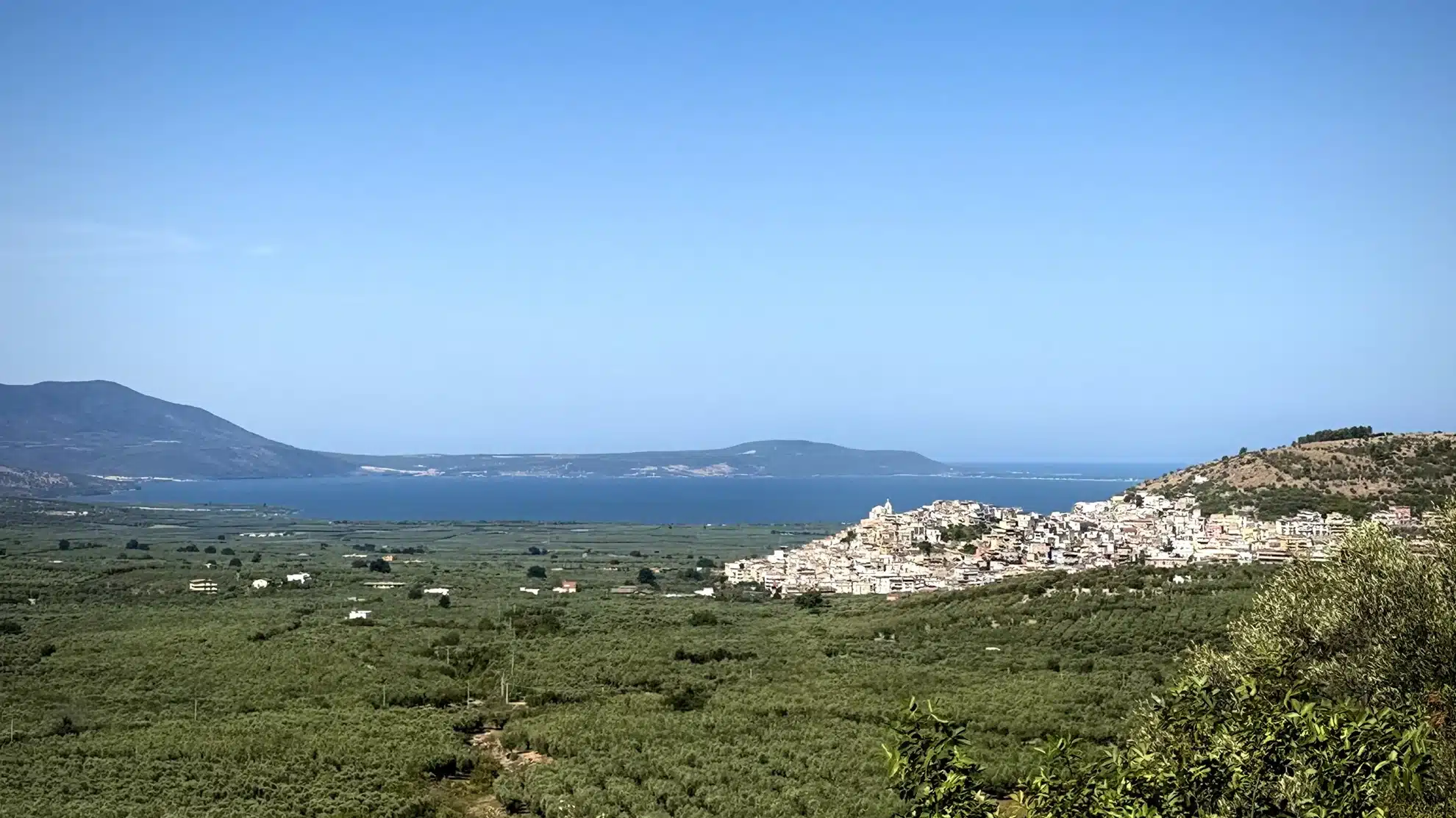
There are places in Italy that you discover by visiting grand squares, entering a museum or following a famous road.
And then there are places that ask you to slow down.
A road climbing toward a hill. A bell tower appearing among the trees. A square where everyday life continues while a new visitor is about to discover it. An artisan’s workshop, a bakery, a small local restaurant, a path beginning just outside the settlement. A landscape that is not simply a backdrop, but part of the experience.
This is where the Italy of inland villages begins.
Every Italian village has its own character, so there is no definitive list capable of representing them all. There are historic small towns, rural settlements, hill and mountain villages, and communities surrounded by very different landscapes, each with its own identity, traditions and forms of hospitality.
Choosing a village therefore is not only a question of asking, “Which one is the most beautiful?”
A more useful question is: “Which village can help me experience the surrounding area in the best way?”
This guide is designed to answer that question.
It explains what Italian inland villages really are, where to find them, how to choose one for your trip, when to go, how long to stay, how to get there, what to do when the weather changes, and how to turn a simple itinerary into a more immersive way of experiencing Italy.
Table of Contents
- What is an inland Italian village?
- Why visit Italian villages?
- Italian villages vs. major cities
- Where to find Italian villages
- How to choose an Italian village
- Famous vs. lesser-known villages
- Village certifications and recognition
- Things to do
- Best time to visit
- How long to stay
- How to get there
- Where to stay
- Villages for different travelers
- Slow and sustainable tourism
- Inland Puglia
- The Gargano peninsula in Puglia
- Carpino
- Using a village as a base
- Planning an itinerary
- Mistakes to avoid
- How to evaluate a village
- When a village becomes more than a destination
- Entering the territory
- FAQ
What Is an Inland Italian Village?
A borgo may be a small historic center that developed around a castle, a hill settlement, an old rural community, or a town that retains a particular relationship between architecture, landscape, historical memory and everyday life.
The word inland does not simply mean “far from the sea.” More broadly, it describes areas located away from the main coastal strips and major urban centers, often with strong connections to agriculture, woods, hills, mountains, small waterways, local traditions and historic settlements.
For that reason, borgo, town, small municipality and historic center are not necessarily synonyms. And not every small municipality is automatically a tourist village.
Village, town, small municipality and historic center: what is the difference?
In everyday travel language these terms can overlap. From a territorial perspective, however, it is useful to distinguish them.
A small municipality is first of all an administrative entity.
A town is a common term for an inhabited settlement.
A historic center is a recognizable historic part of a settlement.
A borgo, in cultural and tourism language, suggests a particular form of settlement in which heritage, identity and landscape are closely connected.
This distinction matters because it prevents the Italy of villages from becoming nothing more than a list of destinations.
Why Visit Italian Villages?
The most common reason is often the least interesting one: they are beautiful.
The deeper reason is that they allow you to change scale.
When you visit a major city, a trip can often be organized around monuments, museums, neighborhoods, events and major attractions.
In an inland village, by contrast, the experience tends to spread into the surrounding area.
The main square leads to side streets; the streets lead to lanes and landscapes; the landscape leads to food, agriculture, walking routes, people, local traditions and other small communities nearby.
This relationship is what makes travel through Italian villages so interesting.
More Than History and Architecture
Visiting a village can mean:
- discovering a church, castle walls, a tower or historic building;
- entering a local artisan workshop;
- tasting a local product or regional specialty;
- learning about a food tradition;
- walking a trail;
- visiting a natural area;
- taking part in a local festival or event;
- photographing details, streets and landscapes;
- walking without a fixed destination;
- staying for several days rather than a few hours;
- using the village as a base for exploring a wider territory.
The point, therefore, is not simply to visit a village, but to understand what it offers and what you can discover around it.
Italian Villages or Major Cities? Two Different Ways to Travel
There is no universally better choice.
A major city generally offers a higher concentration of museums and attractions, events, transport connections, restaurants and services.
An inland village can instead offer a more intimate scale, a more immediate relationship with local people and landscape, and more opportunities to build the trip around the surrounding territory.
| Major city | Inland village |
| High concentration of services | Generally more compact offer |
| Broad cultural choice | Often more concentrated heritage |
| Generally more extensive transport | More variable and fragmented mobility |
| Many attractions within the same area | Stronger relationship with the surrounding territory |
| Urban experience | More territorial experience |
This difference should not be viewed as a limitation. Some of Italy’s richest journeys emerge precisely from the variety between cities and small towns, museums and rural landscapes, well-known destinations and places that receive fewer visitors.
Where to Find Italian Villages
Inland villages can be found along the Alpine and Apennine ranges, in the hills, rural areas, inland parts of southern Italy and the islands.
Every part of the country offers a different combination of landscape, history, architecture and traditions.
Villages in Northern Italy
Northern Italy includes very different settings: small Alpine communities, valley villages, hill towns, fortified settlements and places shaped by agricultural and mountain landscapes.
A trip can become an opportunity to explore not only the village but entire valleys, hiking routes, lake shores, vineyards, woods and rural areas.
Villages in Central Italy
The Apennines and the hill country of central Italy offer one of the most recognizable images of Italy’s small towns.
Here a village can become a meeting point between historic heritage, agricultural landscapes, woods, walking routes and food traditions.
Villages in Southern Italy
In southern Italy, the relationship between small settlements and their territories takes many different forms.
There are mountain villages, hill towns, communities in the southern Apennines and inland areas strongly connected to agriculture, cultivation, livestock, food traditions and Mediterranean landscapes.
Villages in the Italian Islands
Sicily and Sardinia add another dimension. A village may be connected to mountains, plateaus, rural landscapes, pastoral traditions, agriculture and strongly distinctive local cultures.
The real richness is therefore not a national ranking. It is the diversity of Italian landscapes.
How to Choose the Right Italian Village
The question “What is the most beautiful Italian village?” will always have a subjective answer.
A better question is: Which Italian village is best suited to the trip I want to take?
Consider at least these factors:
- Identity: What makes the place recognizable? History, architecture, traditions, crafts, food and local culture can all matter.
- Landscape: Do you prefer hills, mountains, woods, countryside, lakes or Mediterranean coastal territory? Landscape can radically change the experience.
- Experiences: A village can be interesting for what you can do beyond simply seeing it.
- Accessibility: Can you arrive by train or plane? Will you need a car? Are local buses available? How long do transfers take?
- Hospitality: Are there places suitable for one night or for a longer stay?
- Seasonality: The same place can feel completely different in August, October or January.
- Traveler type: A destination ideal for a couple may not be the best choice for a family, remote worker or digital nomad.
- Surrounding territory: This is perhaps the most underestimated criterion. A village does not need to contain everything nearby. It can be valuable precisely because it gives you access to what surrounds it.
Famous or Lesser-Known Villages?
Well-known villages can have exceptional heritage and more developed visitor services. Places that are still less known and farther from mass tourism can offer a more personal and direct discovery.
But there is an important distinction: lesser-known does not automatically mean better.
The quality of a trip comes from the meeting point between what you are looking for and what the place can offer.
A lesser-known village that is difficult to reach may be ideal for someone seeking quiet and isolation, but less suitable for a family with young children.
A famous village may instead offer more services, information and infrastructure, making a trip easier.
The best choice is the one that matches your needs, expectations and desire to discover something new.
Italian Village Certifications, Recognition and Quality Programs
When researching Italian villages, you will encounter several quality marks and programs related to tourism and territorial development.
They should not be treated as directly comparable rankings because they use different criteria and perspectives.
Bandiere Arancioni
The Bandiere Arancioni program of Touring Club Italiano was created to recognize small inland municipalities that distinguish themselves through the quality of hospitality and the destination. Its assessment considers multiple aspects of a destination and includes field verification.
I Borghi più belli d’Italia
I Borghi più belli d’Italia was established in 2002 within ANCI Turismo. Its selection process considers historic, artistic, cultural and landscape heritage, as well as environmental protection, services and hospitality.
The association is also a founding member of the international federation Les Plus Beaux Villages de la Terre, which promotes rural and cultural areas where local quality and heritage are preserved.
UN Tourism Best Tourism Villages
At international level, UN Tourism considers rural villages through a broader perspective that includes cultural and natural heritage, sustainability, governance, infrastructure, tourism development and community well-being.
What These Recognitions Actually Tell You
These programs do not all say the same thing. Some focus more on destination quality and hospitality; others emphasize heritage preservation; others examine the relationship between tourism, communities and sustainable development.
Reading them together can therefore provide useful context without reducing a village to a beauty score.
Things to Do in an Italian Village
A common mistake is to think that visiting a village simply means walking through its historic center. That is only the beginning.
- visit churches, historic buildings and other heritage sites;
- walk along streets and lanes;
- discover workshops and local production;
- taste regional specialties and protected food products;
- take part in festivals and local events;
- explore trails;
- visit natural areas;
- meet local farms and producers;
- take photographs;
- enjoy outdoor activities;
- connect several small towns in one itinerary;
- simply stop and slow down.
That last possibility may be what most clearly separates a slow stay from a quick visit.
What to Do in Italian Villages When It Rains
Rain and difficult weather do not necessarily have to turn a day of discovery into a lost day. They can simply change the rhythm of the trip.
- museums, cultural spaces, cinemas and theaters;
- churches and historic buildings;
- artisan workshops;
- tastings of local products;
- food experiences, guided tours and tasting classes;
- workshops ranging from cooking to creative activities such as ceramics or painting;
- small local events;
- cafés and local restaurants;
- reading and relaxing;
- other indoor activities.
Before leaving, check opening hours. In small communities they may be more seasonal or concentrated on particular days than in major cities.
What Is the Best Time to Visit Italian Villages?
There is no single best season for everyone.
Spring
Ideal for travelers looking for green landscapes, blossoms, generally mild temperatures and outdoor activities.
Summer
Particularly interesting for outdoor events, festivals, activities and longer stays, although some destinations can be busy.
Autumn
A remarkable season for landscapes, food, harvests such as olives, colors and temperatures that are often comfortable for walking during the central hours of the day.
Winter
Can offer a quieter, more intimate dimension, especially in villages that maintain a strong local identity outside the high season.
The choice should therefore combine weather + landscape + events + crowds + desired activities.
How Long Should You Stay in an Italian Village?
It depends on what you want to do.
A Few Hours
Enough for a first, quick visit.
One Day
Allows you to see the center more calmly and spend time on food or one experience.
A Weekend
A weekend begins to change the perspective. You can organize a simple itinerary around the village and part of the surrounding area, while leaving room for spontaneous detours.
Three or Four Days
This is often enough for a more organized small itinerary that combines the territory with scheduled experiences or events.
A Week or More
At this point the village changes function. It is no longer simply somewhere to visit; it can become a territorial base. This is where the value of slow travel really begins to emerge.
How to Get to Italian Villages
Mobility is one of the elements to evaluate before choosing a destination.
Some villages are easy to reach by public transport. Others require a combination of plane, train, bus and taxi. Still others are much easier to reach by car.
Can You Visit Italian Villages Without a Car?
In many cases, yes, but it is not always simple. Before booking, check:
- the nearest railway station;
- bus connections and routes;
- service frequency and weekday/weekend schedules;
- seasonal services;
- distance between the center and your accommodation;
- taxi availability;
- local mobility;
- how easily nearby attractions can be reached.
For a longer stay, the decisive question becomes: “Can I move around easily once I arrive?”
How Much Does a Trip to an Italian Village Cost?
There is no single price for a village vacation. Costs depend mainly on:
- distance from home;
- the transport or combination of transport required;
- season;
- length of the visit or stay;
- type of accommodation, such as vacation rental, hotel or B&B;
- food and dining;
- activities and excursions;
- whether you need a car or rental car.
A weekend can cost very differently from a week, just as a vacation rental may suit different needs from a hotel room.
For a stronger balance between experience and cost, it can help to:
- travel in shoulder or low season;
- stay more nights rather than concentrating everything into a weekend;
- compare the total cost, not only the room rate;
- consider destinations that are less congested;
- choose one base from which to explore several places.
The most useful question is therefore not “What is the cheapest village?” but “Which option gives me the best balance between what I want to experience and what I need to spend?”
Where to Stay in Italian Villages
Your accommodation can completely change the way you experience a trip.
Depending on the destination, you may find:
- hotels;
- B&Bs;
- farm stays;
- alberghi diffusi;
- historic residences;
- vacation rentals;
- rural hospitality;
- small guesthouses.
If you stay for one night, location relative to your planned activities may be the main criterion.
For several days, also consider space, kitchen facilities, privacy, parking, internet connection, remote-work suitability, proximity to essential services, and the relationship with the landscape and territory.
For slow travel, the question changes from “Where do I sleep?” to “Where can I feel connected to the place for a few days?”
Which Italian Villages Are Best for Different Types of Travelers?
There is no perfect village for every traveler. There is a village that is better suited to a particular person, profession, season and travel style.
Villages for Couples
Places combining picturesque landscapes, restaurants, walks, culture and the possibility of staying at an unhurried pace can be especially appealing.
Villages for Families
Check accessibility, distances, services, parking, activities and experiences suitable for children.
Villages for Solo Travelers
Destinations that combine walking, culture, food and nature without requiring every moment to be organized can work particularly well.
Villages for Senior Travelers
Accessibility, slopes, parking, healthcare services and distances can be as important as heritage.
Accessible Villages
Accessibility should not be an afterthought. Before traveling, check access to the historic center, slopes, paving, parking, accommodation accessibility and available services.
Villages for Travelers with Pets
Check the policies of individual accommodations, restaurants, public transport services and natural areas in advance.
Villages for Remote Work
Important criteria include internet quality, an ergonomic workspace, quiet surroundings, length of stay, essential services and the possibility of reaching other centers without a car.
A village can therefore become not only a tourist destination but a temporary base from which to work and experience a new place.
Italian Villages, Slow Tourism and the Future of Rural Territories
Growing interest in small communities is not only about finding beautiful and peaceful places. It is also connected to a broader question: how can tourism be distributed across territories throughout the year?
Italy’s tourism policy increasingly addresses small villages, inland areas and smaller islands as part of broader strategies for national and international attractiveness and for distributing visitor flows across the year.
UN Tourism also approaches rural tourism through the relationship between tourism, sustainability, governance, infrastructure and community well-being.
Slow tourism therefore does not simply mean traveling more slowly. It means improving the quality of the relationship between traveler, place and time.
For tourism to benefit a territory in a meaningful way, however, visitors need to be considered part of a wider balance. A destination is not merely a product to consume; it is a place where people live and where visitors can participate respectfully in the life of the territory.
Inland Villages in Puglia
Puglia is often associated with the sea, beaches, trulli and major summer destinations.
But the region also has an important inland dimension. Here the journey can move from the coast toward hills, countryside, small towns, masserie, olive groves and rural areas that preserve food and cultural traditions deeply connected to the landscape.
Villages to Visit in Puglia
Puglia offers numerous small communities and inland territories. The right choice depends on whether you are looking for historic centers, rural landscapes, food traditions, nature, accessibility or a combination of these.
Small Towns and Villages in Puglia
The appeal of smaller Puglian destinations is often found in the relationship between settlement and countryside: olive groves, farms, local food traditions, historic streets and landscapes beyond the most recognizable coastal images.
Lesser-Known Rural Puglia
Exploring rural Puglia can reveal a different side of the region, especially when the trip is built around several days rather than a short stop.
In northern Puglia, this opens toward one of the most distinctive territories for this kind of travel: the Gargano.
Villages in the Gargano and the Inland Territory
The Gargano is often described through its coastline and clear sea.
That is understandable: the coast, bays, coves and seaside destinations are an important part of its landscape.
But the Gargano is not only a coastal destination. It is a territory where forests, mountains, countryside, olive groves, agricultural areas, lakes, small communities and coast coexist.
The Foresta Umbra, within Gargano National Park, is one of the territory’s most significant natural environments. Its forest ecosystem and biodiversity contribute to a dimension of the Gargano that is very different from an exclusively beach-focused image.
Villages to Visit in the Gargano
The choice depends on the experience you are looking for. The Gargano works particularly well when small communities, nature, inland landscapes and the coast are considered as parts of one territorial itinerary.
Inland Gargano
This variety makes travel through the inland Gargano especially interesting. Starting from a village, the same journey can lead to:
- woods;
- ancient olive groves;
- rural Mediterranean landscapes;
- trails;
- protected areas;
- local food traditions;
- cultural traditions;
- places of worship and sanctuaries;
- small settlements;
- coastal viewpoints.
From this perspective, a village is not an island. It is a gateway to the territory.
Carpino: An Inland Village in the Gargano
Carpino illustrates this idea well. Located inland in the Gargano, it sits within a territory characterized by olive groves, agricultural landscapes, hills and proximity to the natural systems of the promontory.
Things to Do in Carpino
Carpino should not be interpreted only through what you can see along its streets. Its interest becomes greater when you consider it as part of a wider territory. This is a useful way to approach a small community: do not ask only “What is here?”, but also “What can I discover from here?”
Carpino as a Base for Exploring the Gargano
For travelers who want to slow down, experience inland Gargano and build a longer stay, this distinction can be significant.
It is also why the Gargano can be experienced differently from a classic beach vacation: the sea can be part of the experience without being the whole experience.
Using a Village as a Base to Explore a Territory
This is one of the most interesting ideas when moving from fast tourism to a slower stay.
Imagine not changing accommodation every night. Choose a village, settle in, and explore a different direction each day.
One day might be a natural landscape, another a small town, another the coast, another local food, another a panoramic trail.
The advantage is not only logistical. It is also emotional. After several days you begin to recognize roads, places, rhythms and landscapes. The territory stops being a sequence of points on a map and starts becoming a place.
How to Plan an Italian Village Itinerary
A good itinerary does not necessarily contain the largest possible number of villages. It can be more rewarding to build connections.
An Italian Village Weekend
Choose one main destination and one or two nearby places to visit.
Three or Four Days
Combine a village, nature, food and an excursion.
A One-Week Italian Village Itinerary
Use one village as a base and build longer day trips around it.
Thematic Italian Village Itineraries
Choose a connecting theme:
- villages and surrounding nature;
- villages and local food;
- villages and the sea, coastlines and beaches;
- villages and mountains;
- villages and walking routes;
- villages and local crafts;
- villages and cultural heritage and territorial identity.
The principle is simple: fewer stops, more connection.
Mistakes to Avoid When Visiting an Italian Village
- Choosing only from a photograph: a beautiful photograph says little about the overall quality of the experience.
- Staying too briefly: some places need time to be understood and experienced.
- Considering only the historic center: the surrounding territory may be the most interesting part.
- Not checking mobility: a fascinating village can become complicated if you do not plan how to arrive and move around.
- Expecting major-city services: small communities operate at a different scale, especially in service availability and opening hours.
- Planning every minute: part of the value of village travel comes from slowing down and allowing room for an unexpected detour.
- Looking only for the “most beautiful” places: beauty is not the only criterion; the overall quality of the stay matters more.
- Ignoring the season: the same village can offer very different experiences across the year.
- Confusing fame with quality: a famous place is not necessarily the right place for your trip.
How to Tell Whether an Italian Village Is Right for You
If you want to build your own evaluation method, consider these questions:
- Identity: What makes the place recognizable?
- Landscape: What environment surrounds it?
- Experiences: What can you do beyond visiting the town?
- Accessibility: How do you arrive and move around? Can you use public transport?
- Hospitality: Can you stay comfortably? Are there different accommodation options?
- Seasonality: During which season does the village best express its character?
- Traveler: Does it fit your way of traveling: solo, family, weekend, remote work or digital nomad?
- Territory: How many interesting experiences can you reach from there?
A village that answers positively to all these questions is not necessarily “the most beautiful.” It may be something more useful: the right village for you.
When a Village Becomes More Than a Destination
There is a particular moment in some journeys when you stop thinking, “What do we have to see tomorrow?” and start thinking, “Where shall we go tomorrow?”
It is a subtle but important difference. The first attitude belongs to visiting; the second belongs to staying.
When you remain for several days, a village can become:
- a base;
- a temporary workplace;
- a destination for slow travel;
- a starting point for exploration;
- a place to return to;
- a possible experience of everyday life.
This is where tourism can become something more personal.
You Do Not Just Visit Villages: You Enter the Territory
Perhaps the most interesting way to look at Italy’s small communities is to stop considering a village as a simple attraction. A village is not a photograph, a box to tick or simply a collection of old buildings. It is a place where people, memory, architecture, landscape, agriculture, food, nature and time can meet.
That is why traveling through villages can become a different way of crossing Italy. Not necessarily slower, not necessarily cheaper, not necessarily easier, but often closer to the scale of the territory.
Perhaps this is the most important difference. The Italy of villages does not simply ask to be seen. It deserves to be experienced.
Faq –
Frequently Asked Questions About Italian Inland Villages
What are inland Italian villages?
They are small settlements and communities in inland Italy characterized, to varying degrees, by historic heritage, local identity, landscape and a relationship with the surrounding territory. The term “borgo” does not identify one single administrative category.
What are the most beautiful villages in Italy?
There is no universal ranking of beauty. Different selection and recognition programs include I Borghi più belli d’Italia, Touring Club Italiano’s Bandiere Arancioni and UN Tourism’s Best Tourism Villages, each using different criteria and perspectives.
Where are Italian inland villages located?
They can be found throughout Italy: from the Alps to the Apennines, across the hills of central Italy, in southern inland areas, and in Sicily and Sardinia.
What is the best time to visit an Italian village?
It depends on the experience you want. Spring and autumn can be particularly attractive for weather and landscapes; summer offers events and outdoor activities, while winter can provide a quieter atmosphere.
How long do you need to visit an Italian village?
A visit can take a few hours, but staying two or more days allows you to explore the surrounding territory and experience the place at a calmer pace.
Can you visit Italian villages without a car?
Some can be visited without a car, while others are more difficult to reach that way. Check trains, buses, taxis and local mobility before booking.
How much does an Italian village vacation cost?
It depends mainly on season, transportation, length of stay, accommodation, food and activities. There is no standard price for every village.
Which Italian villages are good for families?
It depends on the family’s needs. Accessibility, services, distances, parking, activities and child-friendly accommodation are more useful criteria than a simple ranking.
Which Italian villages should you visit in Puglia?
Puglia offers many small communities and inland territories. The Gargano is one area where villages, rural landscapes, nature, forests and coast can be combined in the same trip.
Which villages should you visit in the Gargano?
The choice depends on the experience you want. The Gargano is best considered as a territorial system in which small communities, nature, inland areas and coast can be combined.
Why visit inland Italy instead of the most tourist-oriented destinations?
Because it offers a different dimension of the territory, often more closely connected with small communities, rural landscapes, food traditions, local culture and everyday life.
Can you stay several days in an Italian village?
Yes. For many destinations, a longer stay allows you to use the village as a base and explore the surrounding territory without repeatedly changing accommodation.
The Italy That Remains When You Stop Rushing
There are trips spent rushing between crowded landmarks simply to prove you were there. And there are journeys that stay with you because they change your relationship with time.
Italy’s inland villages often belong to the second kind. They do not need to be consumed as a checklist. They can be experienced through their streets, landscapes, food, people, traditions and surrounding territory.
Stay long enough to notice how a place changes during the day. Leave room for a meal, a conversation, a walk, a detour. Let the village become a starting point rather than an endpoint.
The Italy of small towns is not one destination and not one category. It is a network of different landscapes and communities, each with its own rhythm.